CULTURE & TEXTS
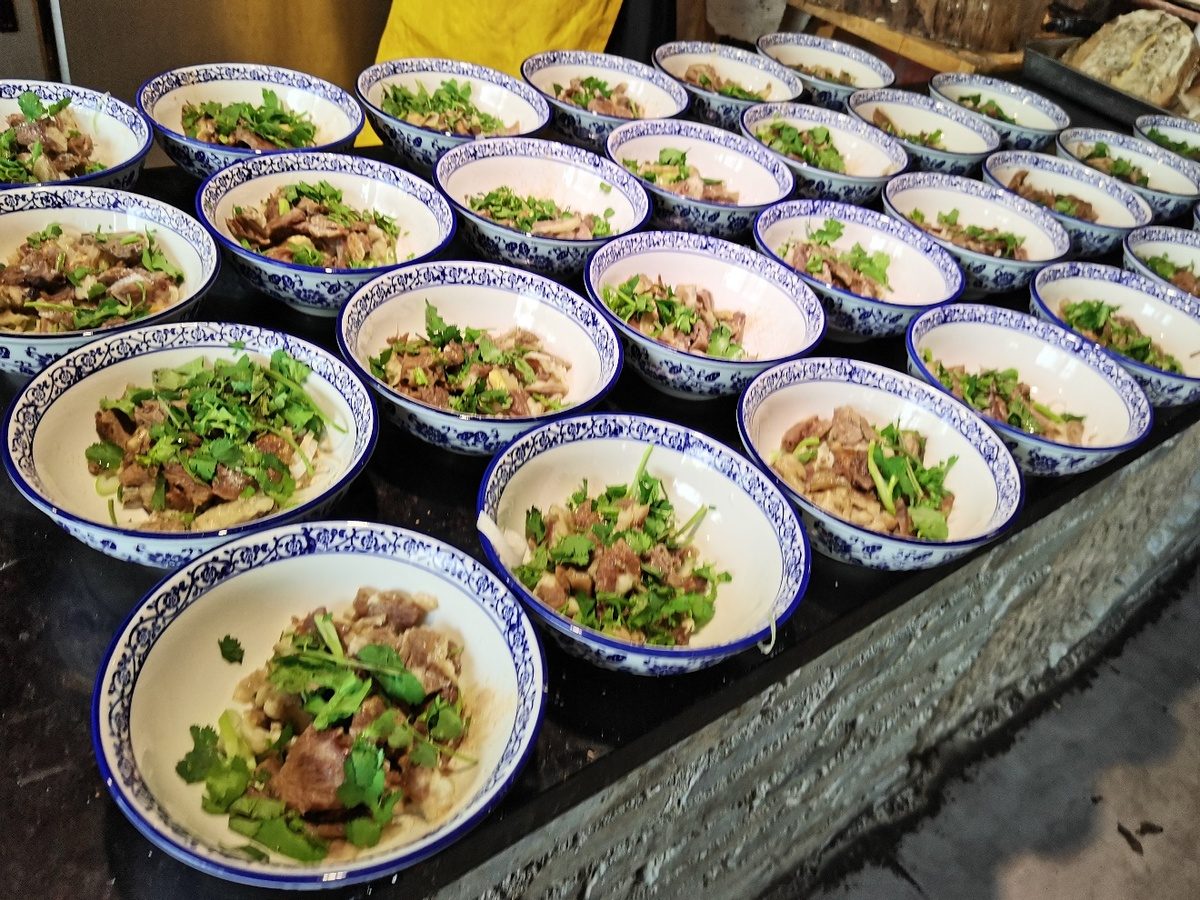
Culinary Culture
Written records of mutton as a delicacy can be traced back two thousand years.
We have brought together here the records in the classics and the pairings at the kitchen stove.
Written records of mutton as a delicacy can be traced back two thousand years.
We have brought together here the records in the classics and the pairings at the kitchen stove.
The following are verbatim records about mutton from the classics of successive dynasties, reproduced as they appear in the originals with their sources noted, for reference in studying food culture and traditional pairings.
"寒疝,腹中痛,及胁痛里急者,当归生姜羊肉汤主之。"
"当归三两,生姜五两,羊肉一斤。右三味,以水八升,煮取三升,温服七合,日三服。若寒多者,加生姜成一斤;痛多而呕者,加橘皮二两、白术一两。" —— 汉·张仲景《金匮要略·腹满寒疝宿食病脉证治第十》。另《金匮要略·妇人产后病脉证治》载:"产后腹中㽲痛,当归生姜羊肉汤主之;并治腹中寒疝,虚劳不足。"
This citation is for textual research and food culture study,and does not involve any claim of disease prevention, treatment, or health care function..
"羊肉:味甘,大热,无毒。主暖中,头风,大风,汗出,虚劳,寒冷,补中益气。" —— 元·忽思慧《饮膳正要》卷第三·兽品。原文据中国哲学书电子化计划(ctext.org)本。
This is a food record from an officially compiled dietary classic of the Yuan Dynasty, falling within the scope of textual research;no efficacy claims for modern food are made..
"羊肉【气味】苦、甘,大热,无毒。"
"【主治】缓中,字乳余疾,及头脑大风汗出,虚劳寒冷,补中益气,安心止惊。" —— 明·李时珍《本草纲目·兽部·羊》(引《名医别录》等)。
同书附方载"羊肉汤":"用肥羊肉一斤,水一斗,煮汁八升,入当归五两、黄芪八两、生姜六两,煮取二升,分四服。"
This is a record from an ancient materia medica text, falling within the scope of textual research;it does not constitute an efficacy claim for any product..
The flavor of a bowl of soup comes from how the mutton and the spices keep company.
| Category | Traditional Pairings |
|---|---|
| Spices | Baizhi (Dahurian angelica root), cinnamon, dried tangerine peel, cloves, Sichuan pepper, star anise, scallion and ginger — spices are used to lift the aroma and quell the muttony smell |
| Classic Combinations | Danggui (Chinese angelica) + ginger + mutton (a traditional pairing recorded in the classics; see Jingui Yaolue above) |
| Accompaniments | Sesame flatbread, griddle cake, cellophane noodles and vermicelli — soaking them in the soup is a common way of eating in southwestern Shandong |
| Adding Flavor | Coriander and chopped scallions are added on serving, with chili oil (red oil) to taste |
| Seasonality | It is most commonly drunk in autumn and winter and is a familiar soup on northern tables during the cold season |
The spices are blended in fixed proportions, and the umami comes from the ingredients themselves and the mastery of the fire — this is a traditional principle of Shanxian Mutton Soup craftsmanship, and it has been written into the association's group standard.
Goat bones form the base and the mutton is laid in place; a fierce high flame keeps the broth moving, so that the fat and the broth blend fully and naturally form a milky-white soup — what the trade calls "the fusion of water and fat".
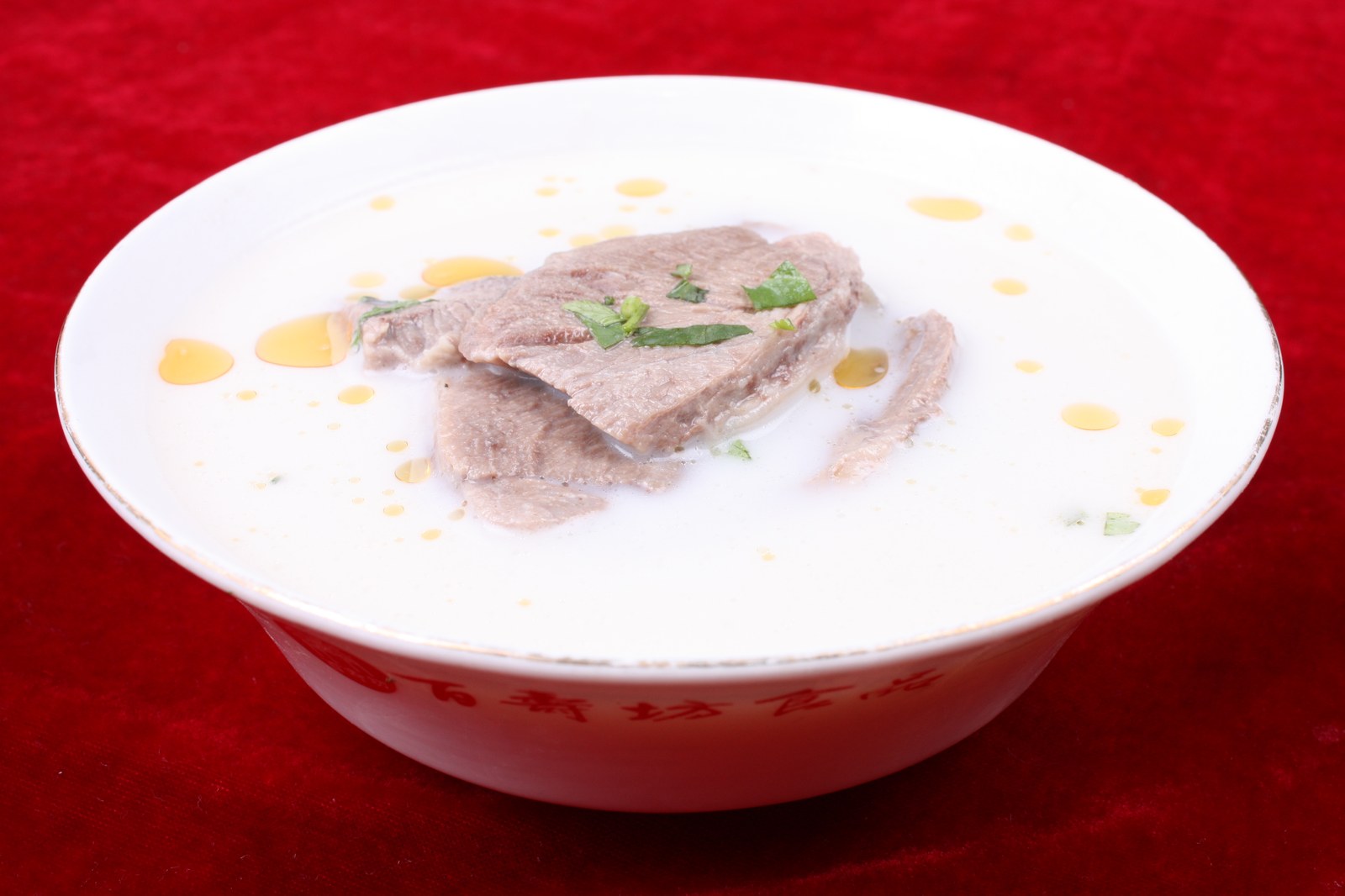
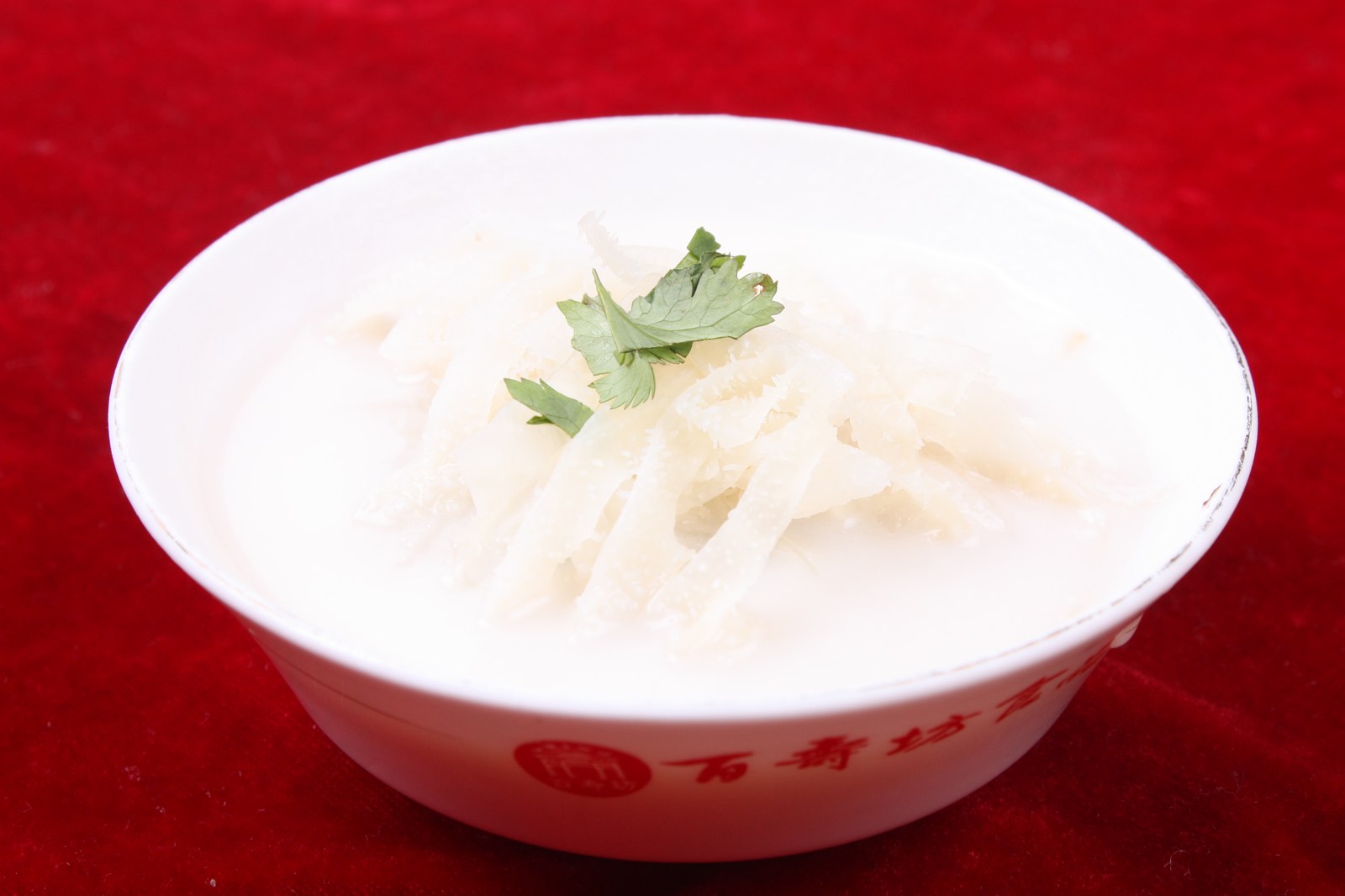
Between a celebrated local delicacy and a full industry lie more than two hundred years.
| Item | Details |
|---|---|
| Historical Origins | The simmering tradition of Shanxian Mutton Soup can be traced in local documents and media reports to the Qing Dynasty (some reports date it back to 1807) |
| Standing in the Literature | It is included in Zhonghua Mingshipu (A Collection of Famous Chinese Recipes), the only soup included in the collection, and is known among the public and in the media as "China's First Soup" (a historical designation; source: media reports) |
| Intangible Cultural Heritage Recognition | The cooking technique of Shanxian Mutton Soup was inscribed on the list of Shandong provincial intangible cultural heritage (2013) |
| Geographical Indication | Shanxian Mutton Soup is a geographical indication (GI) protected product (2015); the Shanxian Qingshan goat is a GI-protected agricultural product (2014) |
| Key Points of the Craft | Laying the ingredients in the pot, attacking with a fierce high flame, skimming the scum, and the fusion of water and fat into a milky-white broth; seasoned with baizhi, cinnamon, dried tangerine peel, cloves and other spices |