Published Standards (Publicly Searchable)
The standards system for Shanxian Mutton Soup consists of multiple sets of standards, issued under the respective auspices of different social organizations. The following is the standards information that can be publicly searched.
I. Group Standards for Mutton Soup Products (T/SXCSSP Series)
| Standard No. | Standard Name | Issue / Implementation Date | Issuing Body |
|---|---|---|---|
| T/SXCSSP 001-2025 | Shanxian Local Delicacy - Canned Mutton Soup | Issued on 2025-03-23 Implemented on 2025-04-23 | Shanxian Longevity Food Culture Association |
| T/SXCSSP 002-2025 | Shanxian Local Delicacy - Solid Mutton Soup | Issued on 2025-03-23 Implemented on 2025-04-23 |
The two standards specify the terms and definitions, technical requirements, inspection methods, inspection rules, marking, packaging, transportation and storage of the products, and the canned mutton soup is applicable toproducts produced and processed using Shanxian traditional techniques and modern sterilization technology, while the solid mutton soup is applicable toproducts prepared and cooked using Shanxian traditional techniques. As for raw and auxiliary materials, the standards require that fresh and frozen mutton comply with GB/T 9961 and GB 2707, and that other raw and auxiliary materials such as edible salt and sesame oil also meet the corresponding national standards.
The association's chair unit and several member companies served as drafting units for these two standards and were deeply involved in their development.
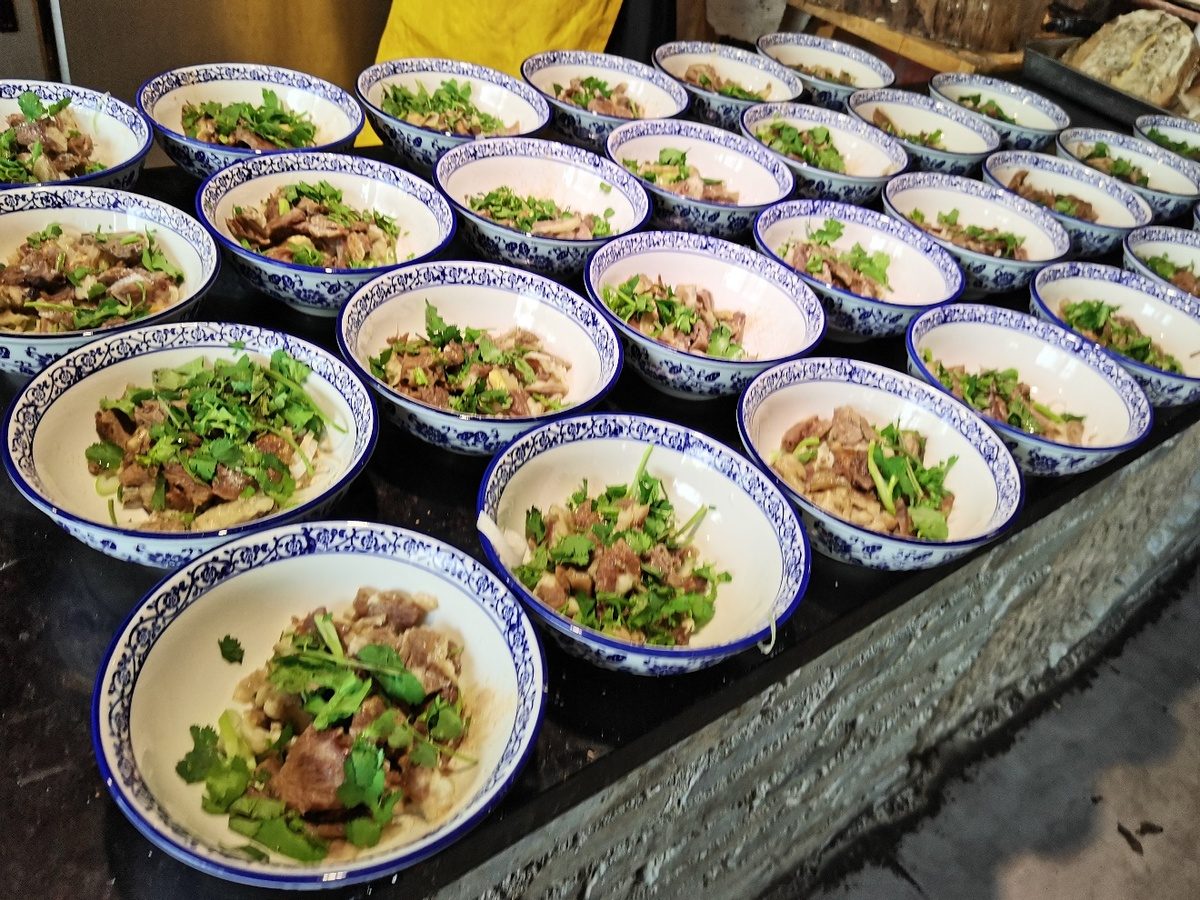
II. Group Standards for the Mutton Dish Series (T/YRTLM Series)
Issued and implemented in June 2024, totaling 19 items, they regulate dish preparation and quality in terms of raw and auxiliary materials, production techniques, sensory requirements, hygiene requirements and other aspects:
| No. | Dish | No. | Dish | No. | Dish |
|---|---|---|---|---|---|
| 001 | Stir-Fried Lamb Liver | 008 | Braised Lamb Chops with Luohan Ginseng | 014 | Crispy Lamb Chops |
| 002 | Stir-Fried Mutton with Scallions | 009 | Spicy Lamb Head | 015 | Plain Lamb Shank |
| 003 | Dry-Fried Lamb Blood | 010 | Lamb Eyes with Garlic Paste | 016 | Plain Mutton |
| 004 | Flaming Lamb Leg | 011 | Spicy Lamb Chops | 017 | Cumin Lamb Chops |
| 005 | Spicy Stir-Fried Lamb Treasure | 012 | Crispy Lamb Shank | 018 | Cumin Mutton |
| 006 | Spicy Stir-Fried Lamb Face | 013 | Crispy Lamb Brain | 019 | Lamb Brain in Superior Stock |
| 007 | Spicy Stir-Fried Lamb Blood | ||||
Also released in the same batch were the “Specifications for Culinary Skills Training Services for Shanxian Mutton Soup” (governing the qualifications of training service institutions, instructors, venues, teaching, and assessment and certification) and the “Specifications for Chain Operations of Catering Enterprises in Shanxian” (governing the basic requirements for chain operations, procurement, processing and distribution, kitchen management, and service management), totaling 21 items.
III. Local Standards
| Standard No. | Standard Name | Date | Issuing Body |
|---|---|---|---|
| DB3717/T 19-2023 | Geographical Indication Product - Shanxian Mutton Soup | Issued and implemented on 2023-11-08 | Heze Municipal Administration for Market Regulation |
Drafting units include the Shanxian Mutton Soup Industry Development Alliance, the Shanxian Bureau of Agriculture and Rural Affairs, the Shanxian Administration for Market Regulation, the Shanxian Animal Husbandry Service Center, and the Shanxian Huxi Industrial Technology Research Institute.
IV. Standards System for the Full Industrial Chain (Production · Processing · Catering)
| Segment | Status of Standards Development |
|---|---|
| Production Segment(Farming) | Standards such as the “Technical Specifications for the Feeding and Management of Shanxian Qingshan Goats” have been formulated,4 group standards in all,, in addition to54 enterprise standards,building a standards system covering breeding technology, management and operations, and regulating Qingshan goat breeding, farming process records, use of inputs, and quality testing |
| Processing Segment | The local standard for Shanxian Mutton Soup has been developed through research,covering 23 items from ingredients to production,to ensure consistent quality of mutton soup across all enterprises and outlets |
| Catering Segment | Group standards for the mutton soup series have been issued, including19 items ofthe “Shanxian Local Delicacies - Mutton Series Dishes”,1 item ofthe “Specifications for Culinary Skills Training Services for Shanxian Mutton Soup”,1 item ofand the “Specifications for Chain Operations of Catering Enterprises in Shanxian” |
· 23 items— The local standard at the processing end, from ingredients to production (The Paper);
· 24 items— The local standard for Shanxian Mutton Soup (per Shanxian's full-chain empowerment coverage);
· 21 items— The total of the second batch of group standards (19 dish standards + the training specification + the chain operation specification);
· 19 items of— The standards for the mutton dish series;
· 4 items— The group standards for Qingshan goat farming;
· More than 10 items— An overview of the association's standards as reported by China Social Work News in July 2025.
When citing externally,please specify the objects counted and the sources,so as to avoid confusing the different bases of counting. This page presents all the bases side by side and does not assert any one of them as the only valid figure.
V. Accessing and Obtaining the Standards
| Standards | Issuing / Publishing Body | How to Search and Obtain |
|---|---|---|
| T/SXCSSP 001-2025 T/SXCSSP 002-2025 | Shanxian Longevity Food Culture Association | Bibliographic information can be searched on the National Digital Standard Library (ndls.org.cn), China Standard Online Service (spc.org.cn);For the official text of the standards, please obtain it from the issuing body or purchase it through official platforms, |
| T/YRTLM 001~019-2024 including the training specification and the chain operation specification | Shanxian Mutton Soup Industry Development Alliance | |
| DB3717/T 19-2023 | Heze Municipal Administration for Market Regulation | The National Public Service Platform for Standards Information (std.samr.gov.cn) for searching |
| Relevant national food safety standards | National Health Commission; State Administration for Market Regulation | National Food Safety Standards Data Retrieval Platform (sppt.cfsa.net.cn:8086/db)Free Access and Download |
If member enterprises need the official text of the standards, it is recommended thatthe association apply for or purchase them centrally from the issuing bodies (the Shanxian Longevity Food Culture Association and the Shanxian Mutton Soup Industry Development Alliance)and that the standards be used within the membership after authorization is obtained — handling it centrally is both compliant and convenient.