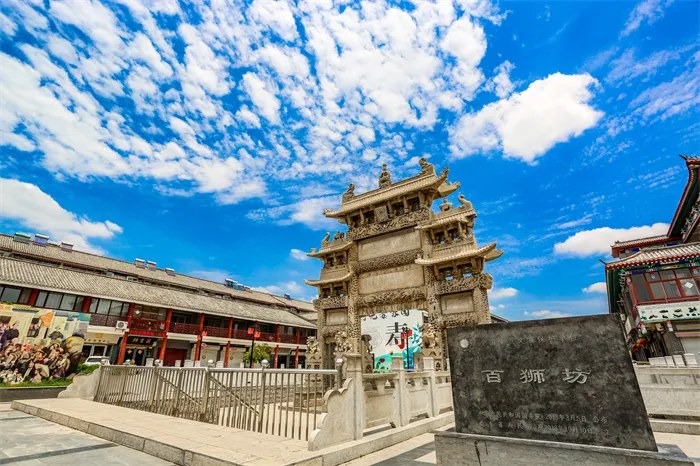
Shou (Longevity)
SHANXIAN · SINCE 221 BC

A Thousand Years of Shanfu

The name of a city comes from the tutor of an emperor.
The flavor of a bowl of soup is bred into the very bones of this city.

Designated a "Thousand-Year-Old County" by the Ministry of Civil Affairs | Shanfu County established under the Qin | A county history of more than 2,200 years
01 Evolution of Administrative Divisions
CHRONICLE

Evolution of Administrative Divisions

Shanxian was anciently calledShanfu— in the late primitive society, the tutor of Emperor ShunShanjuan(also written as Shanjuan and Danjuan) and his tribe lived here, hence the name. Since the county was established under the Qin Dynasty, more than 2,200 years have passed; the county name has changed several times, but the seat of the county has never moved.

Ancient Times
Shanjuan, tutor of Emperor Shun, lived here
Hence the name Shanfu; the county's "culture of goodness (shan)" originates from this
Western Zhou Dynasty
King Cheng of Zhou enfeoffed his youngest son Zhen here, making it the State of the Viscount of Shan
The earliest enfeoffed state established within present-day Shanxian
Spring and Autumn Period
First under Song, then under Lu; it became the Shanfu town (yi) of the State of Lu
Mi Zijian and Wuma Shi, disciples of Confucius, served successively as magistrates of Shanfu, one governing "to the zither" and the other "under the stars and moon"
Qin Dynasty · 221 BC
The Shanfu town (yi) was reorganized into Shanfu County, under Dang Commandery
This was the founding of Shanxian as a county
Western Han Dynasty
Shanfu County and Pingle County were established in the area
They successively belonged to the Liang, Shanyang and Changyi kingdoms; during the reign of Emperor Xuan it was once a marquisate
Sui Dynasty · 6th year of the Kaihuang era (586)
Shanfu County was re-established
It successively belonged to Jiyin Commandery and Daizhou
Tang Dynasty
Shanfu successively belonged to Songzhou, Daizhou, Huizhou and Danzhou
The seats of both Huizhou and Danzhou were in the city of Shanfu; Li Bai, Du Fu, Gao Shi and Tao Mian gathered at Shanfu
Song Dynasty · 1st year of the Jianlong era (960)
Danzhou was elevated to a militia-training prefecture (tuanlian zhou)
It administered four counties — Shanfu, Dangshan, Yutai and Chengwu; the renowned generals Gao Qiong and Han Shizhong once served as defense or militia commissioners of Danzhou
Ming Dynasty · 2nd year of the Hongwu era (1369)
Danzhou was demoted to Shanxian County
The name "Shanxian" was thus fixed and has remained in use unchanged ever since
Modern Era
The Ministry of Civil Affairs designated it a "Thousand-Year-Old County"
It is also the Hometown of Chinese Couplets, the Hometown of Calligraphy and Painting, the Hometown of Opera, the Hometown of Martial Arts, and the Hometown of Longevity
The administrative history is compiled from Historical Evolution issued by the Shanxian People's Government and Shanxian by the Party History Research Institute of the Heze Municipal Committee of the Communist Party of China. As to the year of the early-Ming reorganization, the county gazetteer records that "in the 1st year of the Hongwu era Shanfu County was abolished, and in the following year (the 2nd) Danzhou was demoted to Shanxian County"; this page follows the common formulation that "the name Shanxian was fixed in the 2nd year of the Hongwu era (1369)".
02 Governing by the Zither (Mingqin Er Zhi)
THE FIRST GOVERNOR

Governing by the Zither (Mingqin Er Zhi)

The origin of Shanxian's governing culture lies in a zither from 2,500 years ago. Mi Zijian, a disciple of Confucius,Mi Zijianserved as magistrate of Shanfu; without ever leaving the hall, he brought good order to Shanfu. His successorWuma Shiworked from before sunrise to after nightfall, and Shanfu was equally well governed. One at ease and one at labor, the two left behind the two idioms "governing by the zither" (mingqin er zhi) and "wearing the stars and the moon" (pixing daiyue).

Lüshi Chunqiu (Annals of Lü Buwei), Scroll 21 · "Opening Spring" · "Examining the Worthy"
Mi Zijian governed Shanfu by playing a zither; without leaving the hall, he brought order to Shanfu.
Wuma Qi went out by starlight and returned by starlight, resting neither day nor night and attending to matters in person, and Shanfu was likewise well governed.
Wuma Qi asked Mi Zi the reason, and Mi Zi replied:
"My way is to delegate to others; your way is to rely on your own effort. One who relies on effort is inevitably weary; one who delegates to others is inevitably at ease."
In essence:Mi Zijian governed Shanfu by strumming his zither all day in the hall; without stepping out of the hall, he brought good order to Shanfu. Wuma Qi went out under the stars and returned under the moon, toiling day and night without rest and taking everything upon himself, and Shanfu was likewise well governed. When Wuma Qi asked him why, Mi Zijian said: "My way is to delegate to others; your way is to rely on your own effort. One who relies on effort is naturally weary; one who delegates to others is naturally at ease."

This dialogue was later transcribed in such works as the Shiji (Records of the Grand Historian), "Biographies of the Disciples of Confucius"; the Shuoyuan (Garden of Persuasions), "On Governance"; and the Hanshi Waizhuan (Illustrations of the Odes as Presented by Master Han), with slight differences in wording, but the central theme — "one who delegates is at ease; one who relies on effort is weary" — runs through all of them unchanged, becoming the classic expression of "simplifying government and delegating to the worthy" in Chinese political discourse. In later ages the magistrate's office was accordingly called the "zither hall", and the terrace where Mi Zijian played his zither was called theZither Terrace— the foremost of Shanxian's "Three Terraces Within One Li".

Note: This is historical allusion and political culture, unrelated to food or nutrition; this page makes no statements of efficacy or health implications.
03 Archways
STONE ARCHWAYS

City of Archways · A Hundred Longevities and a Hundred Lions

From the Song Dynasty through the Ming and Qing dynasties, more than a hundred memorial archways were erected in the city of Shanxian; by the end of the Republic of China era, thirty-four still survived, earning it the name "City of Archways". Through all the changes of time, two remain in the city today —BaishoufangandBaishi Fangboth stone structures from the Qianlong reign of the Qing Dynasty, proclaimed by the State Council in 2013 asthe 7th batch of Major Historical and Cultural Sites Protected at the National Level.

Baishoufang
Commonly known as the "Zhu Family Archway"
Major Historical and Cultural Site Protected at the National Level30th year of the Qianlong reign of the Qing Dynasty (1765)
Honored by imperial decree
Kong shi (née Kong), wife of Zhu Shuqi, an archivist (kongmu) of the Hanlin Academy posthumously conferred the honorary title of Rulinlang
Origin of the name
One hundred "shou" (longevity) characters in a hundred different calligraphic styles are carved over the whole body of the archway
Structure
Four pillars and three bays, of bluish oolitic limestone; about 13 meters high and 8 meters wide
Carved ornamentation
Lions rear their heads on the pedestals, dragons coil about the pillars, and the horizontal beams are adorned with peonies, cranes and simurghs
Baishi Fang
Commonly known as the "Zhang Family Archway"; hailed in media reports as the "Number One Archway under Heaven" (media wording)
Major Historical and Cultural Site Protected at the National Level43rd year of the Qianlong reign of the Qing Dynasty (1778)
Honored by imperial decree
Zhu shi (née Zhu), wife of Zhang Pu, posthumously conferred the honorary title of Wenlinlang
Origin of the name
The eight bracing columns are carved with a hundred stone lions in a hundred different postures, expressing the wish that "all affairs go as desired" (bai shi ru yi, where shi is a pun on "lion")
Structure
Four pillars, three bays and a five-tiered roof, with hip-and-gable (xieshan) ridge lines; about 14 meters high and 9 meters wide
Carved ornamentation
Beneath the main eaves, the "Imperial Edict" plaque is framed with openwork carvings of two dragons playing with a pearl, and the central beam carries three tiers of openwork carved peonies on interlocking branches
NamePeriodLocationProtection level
Baishoufang30th year of the Qianlong reign of the Qing Dynasty (1765)Southwest of the Archway Square in North Shanxian CityMajor Historical and Cultural Site Protected at the National Level (7th batch, 2013)
Baishi Fang43rd year of the Qianlong reign of the Qing Dynasty (1778)Northeast of the Archway Square in North Shanxian CityMajor Historical and Cultural Site Protected at the National Level (7th batch, 2013)
Wei Archway60th year of the Kangxi reign of the Qing Dynasty (1721)Wei Paifang Village, Litianlou TownMunicipal-level protected cultural relic site
paifang.
Baishi Fang in situ: the eight bracing columns are carved with a hundred stone lions, expressing the wish that "all affairs go as desired" (bai shi ru yi, punning on "lion") | Image source: Dazhong Wang

Breaking the Ice for Loaches: The Origin of Baishi Fang

Zhang Pu's mother lost her husband in her early years and her son in her old age, and her grief turned into illness. Her daughter-in-law Zhu Shi attended her day and night and sought doctors and remedies to no avail. One day a wandering physician came to the door and wrote out three prescriptions, instructing that live small loaches be used as the tonic. It was the depth of winter and the fish market had none; a fishmonger said that some might be found among the withered grass in the moat west of the city. Zhu Shi went to the riverbank, broke the ice with her bare feet and dug through the mud with her bare hands, enduring the cold for half a day until she finally caught a dozen live loaches. They were brewed into the medicine, and after taking it her mother-in-law gradually recovered.

Zhu Shi's virtue and devotion were widely praised. The locality reported the matter, the court approved it, and an imperial edict ordered the building of a stone archway to honor her. According also to the Shanxian County Gazetteer and local cultural studies, the Zhu and Zhang families were in fact related —the person honored by Baishoufang was the aunt from the natal family of the person honored by Baishi FangThe two archways stand in the same city, echoing each other from afar, and are together called the "Sister Archways".
About the Name "Baishoufang":Chairman's enterprise of the associationShandong Baishoufang Food Co., Ltd.takes its trade name from this Qing-Dynasty stone archway of the Qianlong reign. The archway bears a hundred "shou" (longevity) characters, no two in the same calligraphic style, expressing the meaning of "a hundred longevities" — in the same lineage as Shanxian's regional culture as "China's Hometown of Longevity". The name of the brand is rooted in this city.
The structures, dates and protection levels of the archways are compiled from the Brief Introduction to A-Level Tourist Attractions and Recommended Scenic Sites and the Confirmed Registration List of Cultural Relic Protection Units in Shanxian County (December 2024) issued by the Shanxian People's Government, as well as reports from the People's Daily client; the story of "breaking the ice for loaches" and the kinship between the two archways are based on the Shanxian County Gazetteer and public materials of the Shanxian Historical and Cultural Research Association. Different sources differ slightly on the number of tiers of the two archways (five-tiered / three-tiered pavilion style) and on their height and width; this page adopts the commonly circulated figures and makes no claim of exclusivity.
04 Poetry
POETRY

Four Gentlemen of the Zither Terrace

In the autumn of the 3rd year of the Tianbao era of Emperor Xuanzong of the Tang Dynasty (744), after traveling together through the Liang and Song regions, Li Bai, Du Fu and Gao Shi, at the invitation of Tao Mian, sheriff of Shanfu,Tao Miangathered at Shanfu. Tao Mian restored the Zither Terrace of Mi Zijian; the terrace was square in front and round at the back, shaped like a half moon, and so was also called theHalf-Moon TerraceThe four ascended the terrace together and composed poems over wine. Later ages called them the "Four Gentlemen of the Zither Terrace", also known as the "Four Gentlemen of the Half-Moon Terrace".

According to local cultural studies, Li Bai visited Shanfu four times, staying for several months in all, and left eight poems on Shanfu. Having weathered two thousand years of wind and rain, the site of the Zither Terrace still exists today.

Ascending the Half-Moon Terrace of Tao Shaofu at Shanfu
Tang Dynasty · Li Bai
陶公有逸兴,不与常人俱。 筑台像半月,迥向高城隅。 置酒望白云,商飙起寒梧。 秋山入远海,桑柘罗平芜。 水色渌且明,令人思镜湖。 终当过江去,爱此暂踟蹰。
"Builds a terrace like a half moon" (zhu tai xiang ban yue) is in some editions written with the variant character xiang (象); "turned to the corner of the lofty city wall" (jiong xiang gao cheng yu) is in some editions written hui xiang gao cheng yu. In the title, "shaofu" was a respectful Tang-Dynasty term for a county sheriff, referring to Tao Mian, who restored the Half-Moon Terrace.
Past Travels (Excerpt)
Tang Dynasty · Du Fu
昔者与高李,晚登单父台。 寒芜际碣石,万里风云来。 桑柘叶如雨,飞藿去裴回。 清霜大泽冻,禽兽有馀哀。
The line "flying bean leaves drift and turn about" (fei huo qu pei hui) is in some editions written fei huo gong pai huai. In his later years Du Fu recalled climbing the Shanfu terrace with Gao Shi and Li Bai; "Gao and Li" refers to Gao Shi and Li Bai.
Climbing the Zither Terrace in Autumn with the Company (Excerpt)
Tang Dynasty · Gao Shi
古迹使人感,琴台空寂寥。 静然顾遗尘,千载如昨朝。 临眺自兹始,群贤久相邀。 德与形神高,孰知天地遥。 四时何倏忽,六月鸣秋蜩。 万象归白帝,平川横赤霄。
The complete poem has twenty lines; these are its first twelve. Gao Shi wrote seven or eight poems on the Zither Terrace, the most Shanfu poems preserved among the Four Gentlemen.
Ten Poems of Songzhong (No. 9)
Tang Dynasty · Gao Shi
常爱宓子贱,鸣琴能自亲。 邑中静无事,岂不由其身。 何意千年后,寂寥无此人。
"Gao Shi also wrote Three Poems on the Zither Terrace of Master Mi (the first of which, in some editions, is titled "Ascending Zijian's Terrace in the Jiashen Year"): "Mi Zi governed here of old, / strumming his zither as he climbed this terrace. / The zither in tune and the man worthy, / for a thousand years his talent has been praised. / Gazing afar, I am suddenly struck with sorrow: / where now are the man and the zither? / Vast is this heaven and earth, / with only songs of praise drifting in." The texts differ among editions; for example, "strumming his zither as he climbed this terrace" is in some editions "answering this terrace with his zither", and "with only songs of praise drifting in" is in some editions "with only songs of praise coming in".
The texts of the poems follow the common editions of the Quan Tang Shi (Complete Tang Poems) and published ancient sources, with textual variants noted under each poem. Tao Mian was one of the "Six Hermits of Zhuxi" and then served as sheriff of Shanfu; Li Ning, a younger cousin of Li Bai, then served as registrar (zhubu) of Shanfu.
05 Cultural Landmarks
LANDMARKS

Cultural Landmarks

Besides the two archways, Shanxian keeps a set of traces that stretch from remote antiquity to the present day.

fulonghu
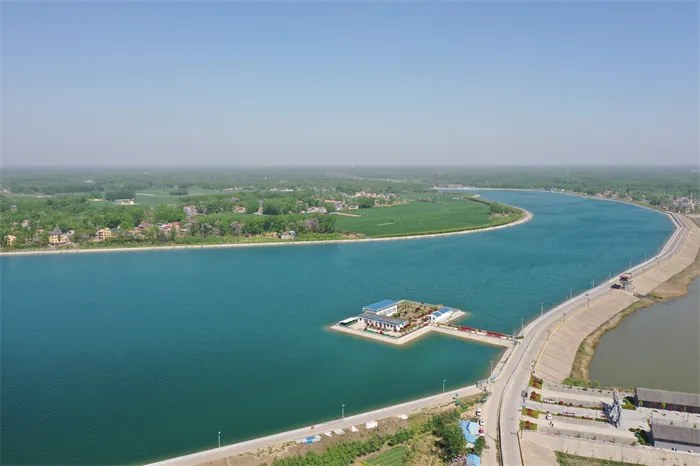
Fulong Lake — the site of Mengzhu Marsh, foremost of China's four great ancient lakes and marshes | Image source: Dazhong Wang

Zither Terrace

The place where Mi Zijian "governed by the zither", also called the Shanfu Terrace and the Half-Moon Terrace. After Tao Mian restored it, Li Bai, Du Fu, Gao Shi and Tao Mian ascended it together to compose poems. Having weathered two thousand years of wind and rain, the ruins still survive today.

Three Terraces within One Li

The three historic sites — the Zither Terrace, the Sun-Drying Immortal Terrace and the Celestial Terrace — stand about one li apart, forming the historical and cultural axis of Shanxian's old city, within the scenic area of the Huxi Revolutionary Martyrs' Cemetery.

Mengzhu Marsh · Fulong Lake

The site of Mengzhu Marsh, foremost of China's four great ancient lakes and marshes, and one of the cradles of the Youyu tribe more than four thousand years ago; it is now the Fulong Lake Ecotourism Resort.

Jianshan

The ancient Jianshan site is one of the thirteen Yin-Shang (Shang Dynasty) sites in the county; "Snow on Jianshan" is one of Shanxian's classical scenic views. It has now been developed as the Jianshan Scenic Area, a national 4A-level tourist attraction.

Zhu Family Compound

A classical residence of the late Ming and early Qing dynasties, covering about 3,000 square meters, with exquisite carvings and an unsophisticated antique style. In 2011 it was opened as the Shanxian Folk Customs Museum, and it is now a provincial-level protected cultural relic site.

Huxi Revolutionary Martyrs' Cemetery

A nationally key protected martyrs' memorial building and a Shandong provincial base for patriotic education; the park takes the thousand-year-old dike and the "Three Terraces within One Li" as its historical and cultural axis.

On "the Cradle of the Dao De Jing and the Birthplace of the Culture of Goodness":This is a formulation proposed by local cultural studies in Shanxian (it is said that Laozi once lived in seclusion and pursued enlightenment here), found mostly in local publicity and media reports; the academic world still holds differing views on Laozi's life and the regions where he was active. This page transcribes it as it stands and makes no definitive assertion.